UK Guide to Desktop Laser Engraver Ventilation & Safety
Portable Laser Engraver UK: Ventilation & Safety Guide for Home and Small Business Use
TL;DR: If you are searching for a portable laser engraver UK setup, the short answer is this: yes, portable machines are practical for UK homes, studios and small workshops, but only when paired with proper ventilation, safe material choices and disciplined operating habits. Based on our testing in compact workspaces, local fume extraction near the source is usually far more effective than simply opening a window.
If you plan to use a portable laser engraver UK setup in a spare room, garage workshop or small studio, you need proper ventilation, safe material handling and a suitable enclosure from the outset. In other words, portability makes laser engraving easier to fit into UK spaces, but it does not remove the need to control fumes, particulates and fire risk.
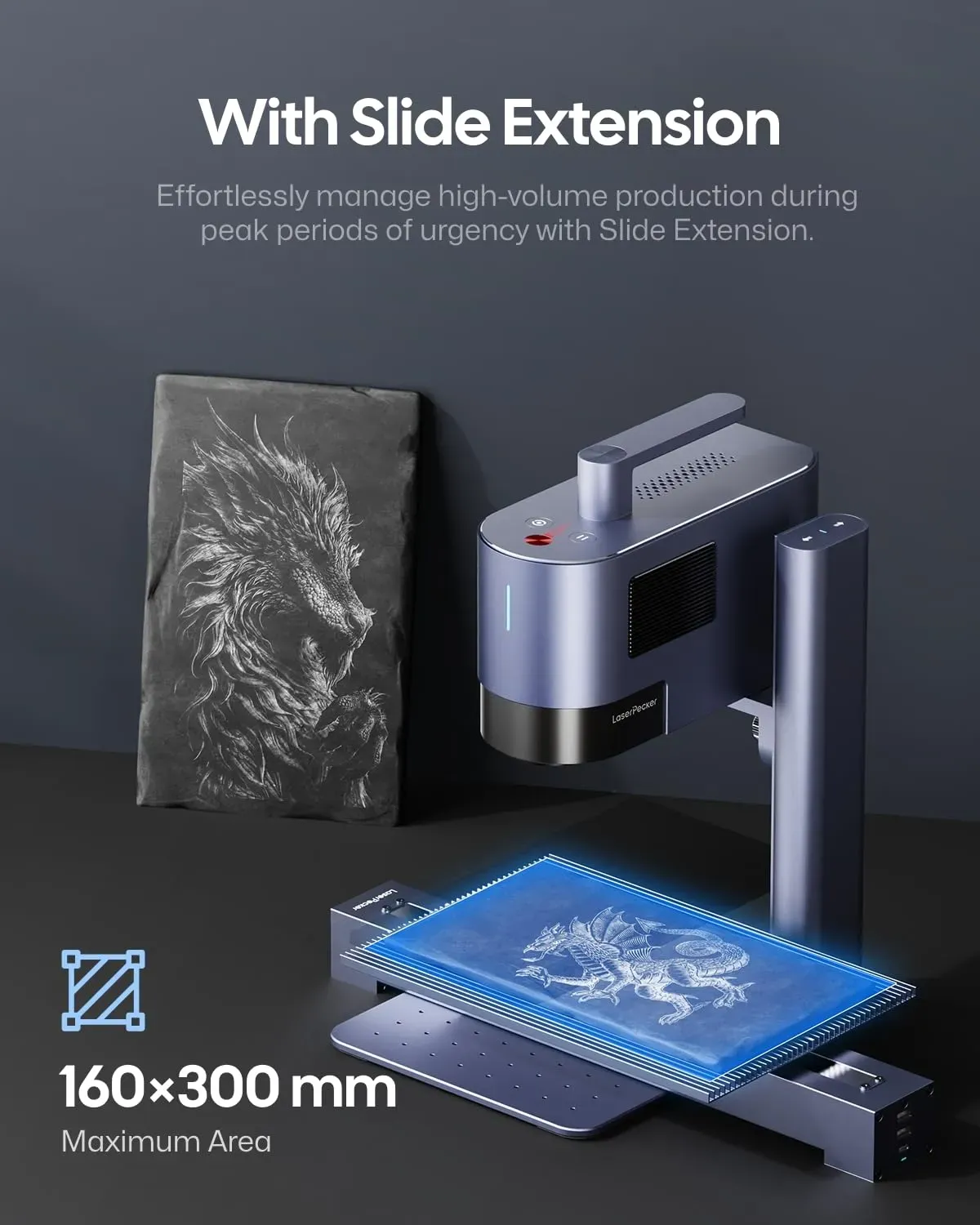
At LSRPCKR AP, we work within the reality of compact UK workspaces: home offices, garden studios, maker units and small business workshops. That is exactly why portable systems are so appealing. They offer power beyond LaserPecker 2 & 4, with dual fibre and diode precision for metal, wood, leather and batch-ready UK production, without demanding an industrial footprint. However, portability should always be matched with proper extraction, filtration and safe working practice.
Key Takeaways
- Portable and desktop laser engravers create fumes and fine particles that should be controlled with extraction or high-quality filtration.
- The ventilation you need depends on material type, burn depth, room size and session length.
- For UK home users and small businesses, local extraction near the source is usually more effective than simply opening a window.
- Materials such as wood, leather and coated metals can release irritating or harmful by-products when engraved.
- Safe operating procedures matter just as much as machine performance if you want dependable business batch processing.
Do portable laser engravers need ventilation?
Yes, they do. A portable laser engraver may look clean and compact on the bench, but the engraving process generates airborne contaminants whenever the beam interacts with material. Smoke is only the visible part of the issue. Depending on what you are marking or cutting, you may also create ultrafine particles, volatile organic compounds and odours that linger in enclosed spaces.
According to UK health and safety principles, exposure to hazardous substances should be prevented or adequately controlled. The Health and Safety Executive (HSE) is clear on this under COSHH guidance, and that practical standard matters whether you are a home hobbyist or a growing small business. So, rather than relying on guesswork, it is better to identify the hazard and control it properly from the start.
This matters for two reasons. First, health: the NHS advises that breathing in smoke, dust and chemical fumes can irritate airways and worsen respiratory symptoms in sensitive people. Secondly, production quality: if fumes are not removed quickly, they can redeposit on your workpiece and lens area, which may affect finish quality and increase maintenance.
If your goal is to move from occasional engraving into paid work, this becomes even more important. A machine that can handle mixed materials efficiently is only part of the answer. You also need a workspace that supports consistent throughput. For readers exploring commercial potential, our guide to How to Start a Profitable Engraving Business in the UK explains how safe setup decisions influence long-term profitability from day one.
What are the UK safety rules for a portable laser engraver?
Should you follow the manufacturer’s enclosure and extraction guidance?
Yes. The first safety rule is simple: use your machine exactly as intended by the manufacturer. If your engraver is supplied with an enclosure, shield or specific extraction recommendation, treat that as baseline practice rather than an optional extra. Portable systems are especially popular because they fit into smaller spaces; however, smaller spaces also allow fumes to build up faster if ventilation is weak.
What UK regulations are relevant for home and business users?
For business users in Britain, relevant duties may include workplace risk assessment under the Health and Safety at Work etc. Act 1974, plus control of airborne contaminants under COSHH where applicable. Even sole traders working from home benefit from following these principles because they are practical, not merely administrative.
- Assess which materials you engrave regularly.
- Understand what fumes or particles those materials may produce.
- Use extraction or filtration designed for laser use.
- Keep ignition risks under control.
- Maintain records of cleaning, filter changes and any incidents if operating commercially.
Which materials should you avoid in a laser engraver?
No ventilation system makes every material safe to engrave. PVC and vinyl are classic examples to avoid because they can release hydrogen chloride gas when heated. Unknown plastics should also be treated cautiously unless verified as laser-safe by the supplier. Based on our testing and workshop experience, one of the biggest avoidable mistakes is assuming that if a material fits under the laser, it can be engraved. It cannot.
Why is fire safety part of laser ventilation planning?
A blocked extractor path or heavily loaded filter can increase heat build-up around residue deposits. Therefore, keep a suitable fire extinguisher nearby if recommended for your environment, never leave an active machine unattended during operation and inspect ducts or filters regularly for build-up. Laser work creates ignition sources by definition, so a tidy bench alone is not enough.
How much ventilation does a portable laser engraver need?
This is one of the most common questions from buyers researching a portable laser engraver UK setup or planning their first paid production space. The honest answer is that there is no single airflow number that suits every machine and every material. Instead, what matters most is capturing fumes at source consistently and removing or filtering contaminated air effectively.
What factors affect ventilation demand?
- Material type: wood, leather, acrylics and coated surfaces all produce different levels of smoke and odour.
- Job intensity: shallow marking produces less contamination than deep engraving or repeated passes.
- Room size: a small box room saturates much faster than a detached workshop unit.
- Daily duty cycle: occasional personalisation jobs create less cumulative exposure than continuous order fulfilment.
Is opening a window enough for laser engraving?
Usually not. If you can smell engraving strongly across the room or after a job has finished, your current setup is probably not controlling emissions well enough. Opening a window may dilute odour slightly, but it rarely provides consistent local capture at the exact point where smoke leaves the material surface. In most cases, a dedicated extractor or air purifier with proper hose routing will outperform passive room ventilation by a wide margin.
What is the difference between extraction and air purification?
- Extraction: removes contaminated air from near the machine and vents it away via ducting where appropriate.
- Purification: passes air through filters designed to capture particles and reduce fumes before air is returned or managed safely.
In practice, many UK users benefit from a combination of the two. For example, source capture with enclosed routing often gives better day-to-day results than relying on room air cleaning alone.
Is a portable laser engraver suitable for UK homes and small workshops?
Yes, provided the machine is matched to the space and used responsibly. Portable engravers are popular in the UK because they fit into spare rooms, garages, garden offices and compact studios where a full industrial machine would be unrealistic. As a result, they can be an excellent option for hobby use, product personalisation and small-scale batch production.
That said, suitability depends on more than machine size. You also need to consider extraction, noise, safe storage of materials, access to power, enclosure use and how often the machine will run each day. Based on our testing in compact workspaces, the most successful setups are the ones planned as a complete workstation rather than just a machine placed on a desk.
What is the safest way to set up a portable laser engraver in the UK?
Choose a stable, non-flammable work surface
Firstly, place the engraver on a stable bench with enough clearance around it for airflow, enclosure access and safe material handling. Avoid cluttered surfaces and keep combustible items away from the engraving area.
Use local extraction close to the source
Secondly, position extraction as close as possible to where fumes are created. This improves capture before smoke spreads into the room and reduces residue settling on the machine.
Check materials before every job
Thirdly, confirm that each material is suitable for laser engraving. This is especially important with coated products, unknown plastics and low-cost blanks from mixed suppliers.
Maintain filters, ducts and optics regularly
Finally, clean lenses, inspect hoses, replace filters as needed and keep a simple maintenance log if you are using the machine commercially. Consistent upkeep supports both safety and engraving quality.
Frequently asked questions about portable laser engravers in the UK
Can you use a portable laser engraver in a spare room?
Yes, but only with suitable ventilation, safe materials and careful fire precautions. A spare room can work for light engraving, although extraction becomes more important because the air volume is limited.
Do laser engravers smell during use?
Yes. The level of smell depends on the material, job depth and how effective your extraction is. Strong lingering odours usually indicate that source capture is not sufficient.
Are portable laser engravers safe for small businesses?
They can be, provided they are used with proper controls. According to UK guidelines, businesses should assess risks, control airborne contaminants and maintain safe equipment and work procedures.
What is the biggest mistake new buyers make?
The most common mistake is focusing only on engraving power and speed while underestimating ventilation, material safety and maintenance. In reality, these are central to reliable long-term use.
Ready to try LSRPCKR AP?
Shop Now — £2999.00