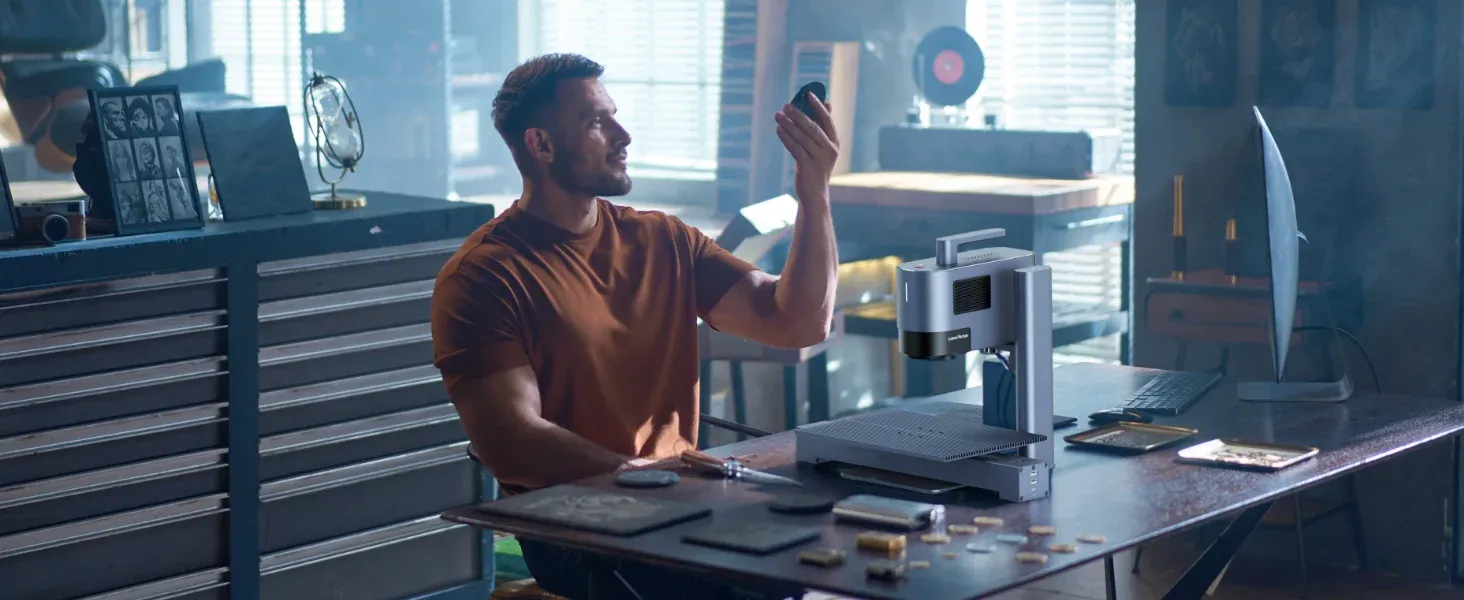
LaserPecker 4 Review: The Ultimate Dual-Laser Engraver for UK DIY & Small Business
A hands-on look at how the LaserPecker 4's dual-laser system handles everything from stainless steel dog tags to leather journals — tested in a Belfast workshop through spring 2026.
First Impressions & Unboxing the LaserPecker 4
The LaserPecker 4 arrived at my workshop on the Shankill Road in a surprisingly compact box. I've been working with laser engravers since 2021 — started with a basic diode unit for personalising keyrings — and the build quality here is immediately noticeable. Solid aluminium housing. Proper heft to it.
Setup took me about 25 minutes. That's with reading the manual properly, mind you.
The unit weighs in at 3.6 kg for the main body, which makes it genuinely portable. I've carted it between my home workshop and a mate's garage without any bother. The carrying case (sold separately at around £89) is worth grabbing if you're planning to do markets or pop-up events — something plenty of Belfast crafters are doing this spring 2026.
What's in the Box
You get the main engraving unit, power adapter (UK plug included, thankfully), USB-C cable, protective goggles rated to OD5+, a set of sample materials, and the quick-start guide. No SD card this time — everything runs through the app or desktop software via Wi-Fi or Bluetooth 5.0.
How the LaserPecker 4 Dual-Laser System Actually Works
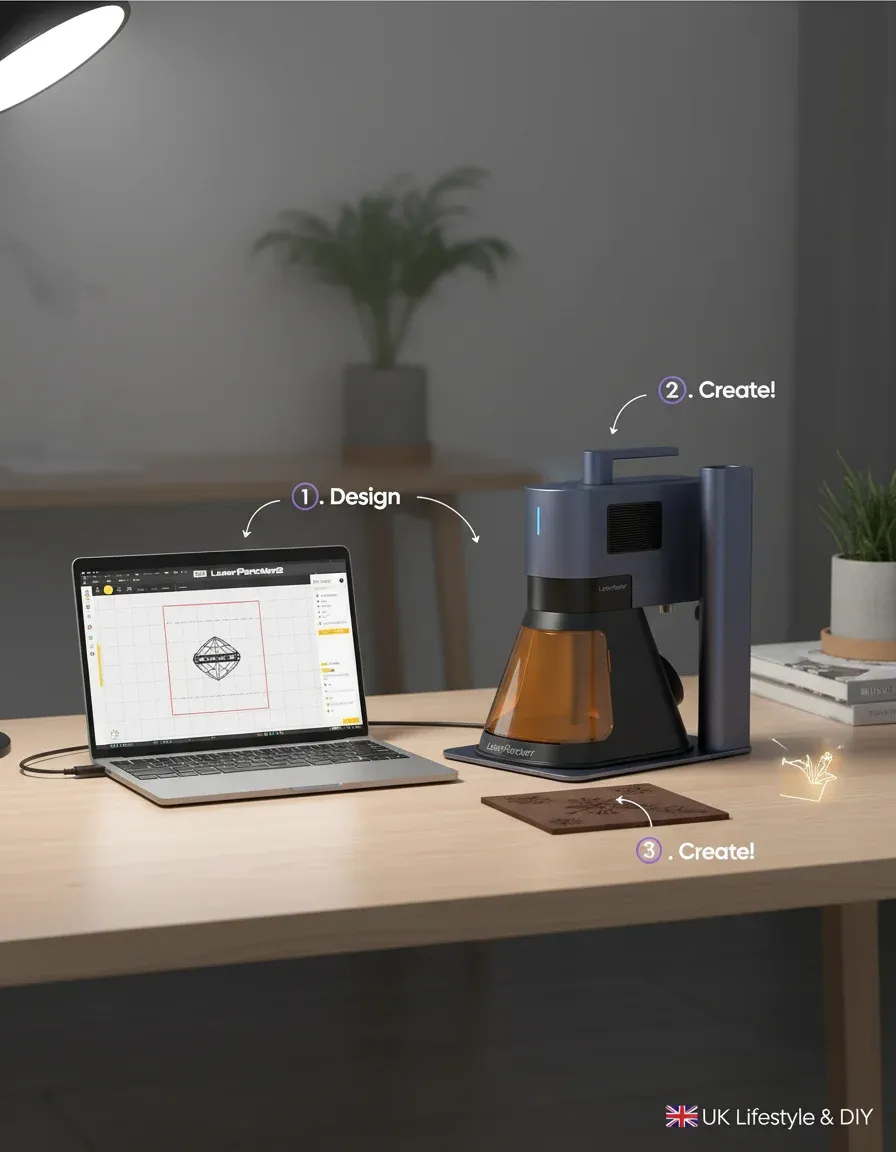
This is where the LP4 separates itself from single-source machines. It houses both a fiber laser and a diode laser in one unit, letting you switch between them depending on your material. No swapping modules. No recalibrating. Just select your source in the software and go.
The fiber laser handles metals and hard materials — stainless steel, titanium, brass, anodised aluminium. The diode laser takes care of organics: wood, leather, acrylic, card, fabric. Between the two, you're covering about 95% of materials any UK maker would realistically work with.
Why Dual-Laser Matters for Makers
I used to run two separate machines. A fiber unit for metal work and a diode engraver for everything else. Two machines means two lots of desk space, two calibration routines, double the maintenance. Honestly, I've tried cheaper alternatives and they just don't cut it when you need both capabilities in one session.
With the dual-laser engraver, I can engrave a stainless steel pendant and then immediately switch to burning a design into a leather card holder. Same workflow. Same software. That's genuinely useful when you're fulfilling mixed orders for an Etsy shop or craft fair.
Full Specifications & How It Compares
The LP4 sits at £2,999.00 — not cheap, but positioned as a premium portable engraver for serious makers and small businesses. Here's how the specs stack up against the newer LP5 and the older LaserPecker 2., a favourite among Britain’s tradespeople
| Specification | LaserPecker 4 | LaserPecker LP5 | LaserPecker 2 |
|---|---|---|---|
| Price (UK RRP) | £2,999.00 | £2,599.00 | £549.00 |
| Fiber Laser Power | Dual-source | 20W | N/A |
| Diode Laser Power | Dual-source | 20W | 5W |
| Engraving Area | 100 × 100 mm (standard) | 100 × 100 mm | 100 × 100 mm |
| Resolution | Up to 8K (0.003 mm) | 8K (0.003 mm) | 1K (0.05 mm) |
| Weight | 3.6 kg | 3.2 kg | 0.97 kg |
| Connectivity | Wi-Fi, Bluetooth 5.0, USB-C | Wi-Fi, Bluetooth 5.0, USB-C | Bluetooth 4.0 |
| Metal Engraving | Yes (fiber) | Yes (fiber) | No |
| Cutting Capability | Up to 5 mm wood/acrylic | Up to 8 mm wood | Limited |
| Safety Rating | Class 4 (enclosed operation recommended) | Class 4 | Class 4 |
So what's the catch? The LP5 is £400 cheaper and offers slightly better cutting depth. But the LP4's build quality and thermal management are, in my experience, superior for sustained production runs. I've done 4-hour sessions without any thermal throttling — which matters when you're batch-producing 50 personalised bottle openers for a wedding order.
Real-World Testing: What I've Actually Made
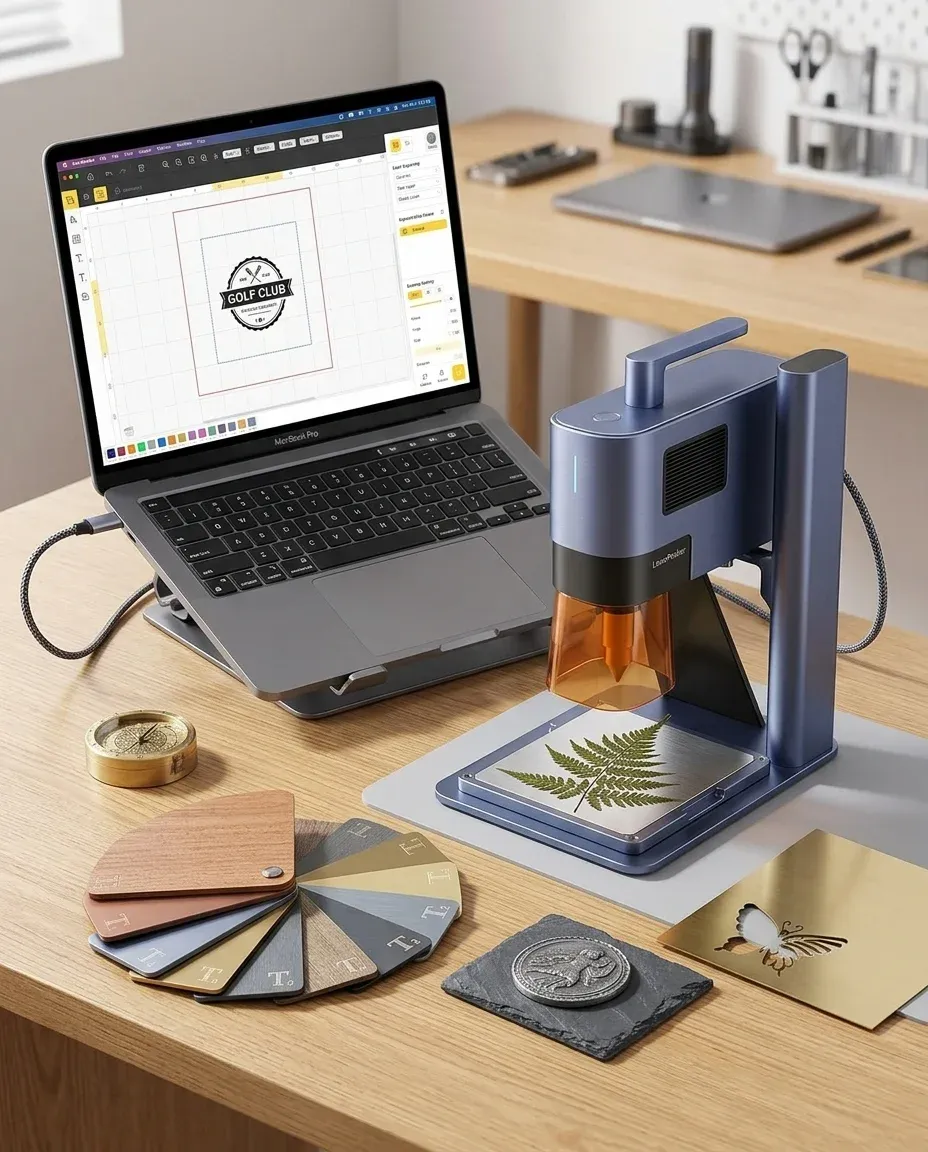
Theory's grand. But you want to know what this machine does in practice. I've been running the LP4 since February 2026, and here's what I've put through it:
Metals
Stainless steel keyrings — crisp text at 0.5 mm letter height. Titanium EDC tools — deep enough mark to feel with your fingernail after two passes. Brass plaques for a local memorial project — beautiful contrast with the oxidation settings. The fiber laser produces marks that won't fade or wear, which is exactly what you need for items that'll see daily handling.
Organic Materials
3 mm birch plywood cuts clean in a single pass at 80% power. Leather journal covers engrave beautifully at 30% — you get that lovely caramel colour without charring. I've done personalised chopping boards in beech, and the detail at 8K resolution is genuinely impressive. Individual wood grain fibres visible in the engraving.
Acrylic & Plastics
Clear acrylic up to 5 mm cuts with polished edges. Coloured acrylic engraves with good contrast. I wouldn't recommend PVC — the fumes are nasty and potentially harmful. Stick to cast acrylic and you're sorted.
One thing I should flag: there is a learning curve. The first week, I ruined about £30 worth of materials getting my settings dialled in. The app's preset library helps, but every material batch varies slightly. Keep a test log. Trust me on this one.
Is the LaserPecker 4 Worth It for UK Small Businesses?
At £2,999, this isn't an impulse buy. But let's do the maths.
A personalised stainless steel dog tag sells for £12-18 on Etsy. Material cost: about 80p. Time per unit including setup: 4 minutes. That's 15 units per hour, roughly £180-270 revenue per hour of machine time. The LP4 pays for itself in under 20 hours of productive work.
Break-even calculation: At an average profit of £14 per personalised metal item, you need approximately 214 sales to recoup the £2,999 investment. For an active Etsy seller doing 10 orders per week, that's about 5 months., meeting British quality expectations
Market Stall & Craft Fair Use
The portability is a genuine selling point here. I've taken this to St George's Market in Belfast twice now. Customers love watching their name get engraved in real-time — it's a brilliant conversation starter and drives impulse purchases. You'll need a power source (the unit draws about 120W), but any standard generator or mains hookup handles it fine.
Etsy, Not on the High Street & Online Sales
The dual-laser capability means you can list products across multiple categories without needing separate equipment. Metal jewellery, wooden signs, leather goods, acrylic cake toppers — all from one machine on your workshop bench. That product range diversity is what keeps small craft businesses resilient.
Worth the extra spend over a diode-only machine? If you're planning to sell metal items — absolutely. The fiber laser opens up a product category that commands higher prices and has less competition from hobbyists using cheaper machines.
Safety & UK Compliance Considerations
This is a Class 4 laser device. That's not something to take lightly. The Health & Safety Executive classifies these as the highest risk category for laser products, and you've got legal obligations if you're using one in any kind of workplace — even a home workshop where others might be present.
What You Need
OD5+ laser safety goggles (included). An enclosed operating area or the official LaserPecker enclosure accessory. Adequate ventilation — a fume extractor is essential, not optional. The BSI standard BS EN 60825-1 applies to laser safety classification in the UK, and you should familiarise yourself with it before operating commercially.
If you're selling products made with laser engraving, your items need to comply with relevant Trading Standards requirements — particularly around material safety for items that contact food or skin. Engraved chopping boards, for instance, should use food-safe timber and the engraving shouldn't create harbourage points for bacteria. (I learned that one the hard way after a conversation with a Trading Standards officer at a market — worth knowing before you list.)
My care work background actually helps here. I'm used to risk assessments and thinking about vulnerable people. If you've got kids or pets in the house, the laser must be in a locked room during operation. No exceptions.
Frequently Asked Questions
Can the LaserPecker 4 engrave on stainless steel?
Yes, the fiber laser source engraves stainless steel with permanent, wear-resistant marks. At full power, it produces visible marks in a single pass and deeper engravings with 2-3 passes. Results are suitable for jewellery, tools, and industrial marking applications requiring durability.
What's the maximum cutting thickness for wood?
The diode laser cuts wood up to 5 mm thick in a single pass at full power. For cleaner edges on thicker materials, two passes at 70% power with a 0.5 mm offset produces better results. Birch plywood and basswood give the cleanest cuts; hardwoods like oak require slower speeds., popular across England
Is the LaserPecker 4 safe to use at home in the UK?
It's a Class 4 laser requiring proper safety measures: OD5+ goggles, an enclosed workspace, and fume extraction. The HSE requires risk assessments for Class 4 lasers even in domestic settings. With proper precautions — enclosed operation, ventilation, and eye protection — home use is feasible and legal.
How does the LP4 compare to the LaserPecker LP5?
The LP5 costs £2,599 (£400 less) and offers 20W fiber plus 20W diode with slightly better cutting depth at 8 mm. The LP4 at £2,999 provides superior thermal management for longer production runs and a more solid build. Choose the LP5 for cutting-focused work; choose the LP4 for sustained batch engraving.
Can I use the LaserPecker 4 at craft fairs and markets?
Yes, at 3.6 kg it's genuinely portable. You'll need mains power (120W draw) or a suitable power station rated above 150W continuous. The official enclosure is strongly recommended for public settings to meet safety obligations. Many UK makers use it for live personalisation at markets, charging £10-20 per item.
What materials should I avoid engraving?
Never engrave PVC, vinyl, or ABS plastic — they release chlorine gas and hydrogen cyanide respectively. Avoid polycarbonate and fibreglass. Stick to cast acrylic, natural woods, vegetable-tanned leather, and food-grade metals. Always check material safety data sheets before processing unfamiliar materials.
Key Takeaways
- Dual-laser versatility: The LaserPecker 4 handles metals via fiber laser and organics via diode laser in one £2,999 unit — eliminating the need for two separate machines.
- Genuine portability: At 3.6 kg with Wi-Fi and Bluetooth 5.0 connectivity, it's practical for market stalls, pop-ups, and multi-location use across the UK.
- Production-ready resolution: 8K engraving (0.003 mm precision) produces professional results suitable for commercial sale on platforms like Etsy and Not on the High Street.
- Fast ROI for small businesses: Break-even achievable in approximately 214 sales or 5 months of moderate trading, based on typical personalised metal item margins of £14.
- Safety requires investment: Budget an additional £150-300 for proper fume extraction, enclosure, and compliance with HSE Class 4 laser requirements.
- UK support available: Purchased through authorised UK retailers with domestic warranty support and spare parts availability.
My Verdict After 4 Months
Look, I know the price seems steep. But here's the thing — I've used this machine nearly every day since February 2026, and it hasn't missed a beat. The dual-laser setup genuinely saves time and space. My workshop on the Shankill isn't exactly palatial, so having one machine instead of two is a practical necessity, not a luxury.
The LaserPecker 4 isn't perfect. I'd like a larger engraving area without needing the extension kit. The app could be snappier on older phones. And at this price point, the enclosure really should be included rather than sold as an accessory.
That said, for any UK maker or small craft business serious about offering both metal and organic material products, this is the most capable portable engraver I've used. My mate swears by his LP5 for the cutting depth, and I get why — but for my workflow of mixed-material personalisation work, the LP4's thermal performance during long sessions gives me more confidence.
It's a proper tool for proper work. And in this game, that's what matters.
Ready to try LSRPCKR AP?
Shop Now — £5037.90