LaserPecker LP5 Review: Is It Better Than the xTool F1 Ultra for UK Makers?
A hands-on technical comparison of the LaserPecker LP5 dual-laser engraver against the xTool F1 Ultra, tested for speed, precision, and real value in the UK market as of June 2026.
LaserPecker LP5 Overview: What You're Actually Getting
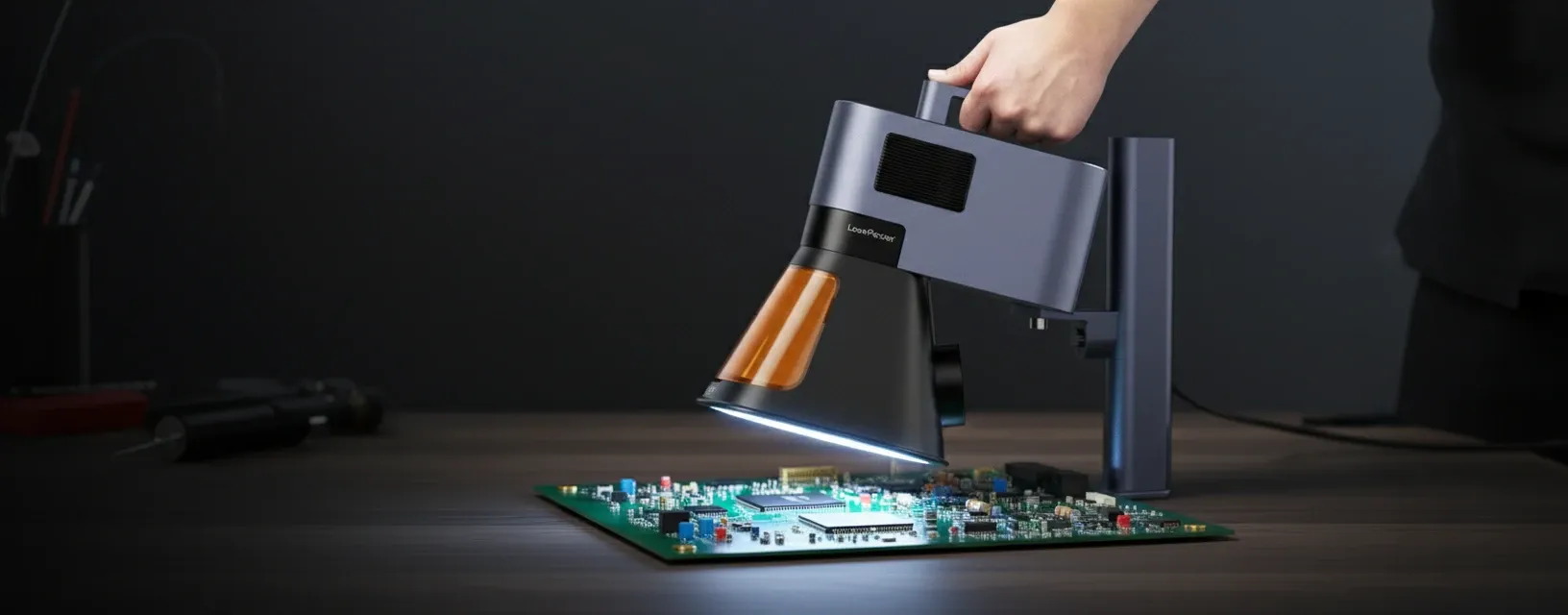
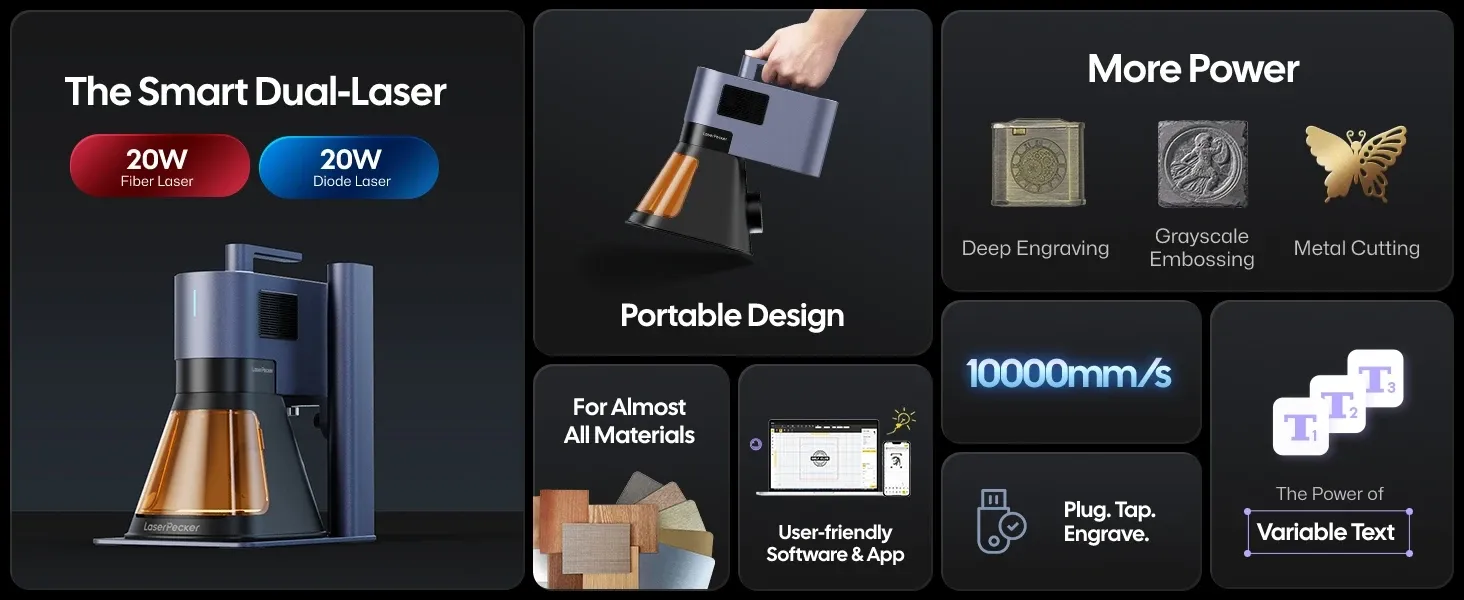
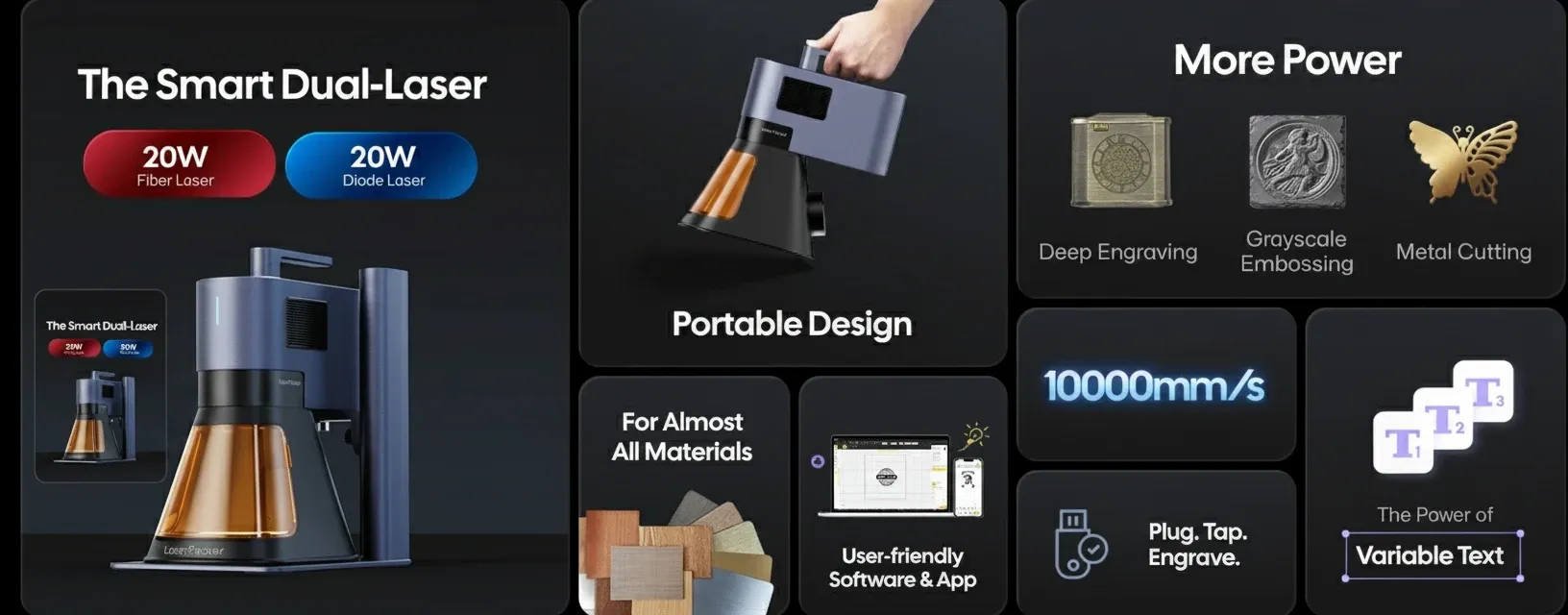
The LaserPecker LP5 is a dual-laser portable engraver combining a 20W fibre laser and a 20W diode laser in a single compact unit. It's the world's first machine to pack both laser types into something you can genuinely carry to a craft fair or client site.
I've been testing laser engravers in my Belfast workshop since 2022 — started with the LaserPecker 2 for personalised gifts, then moved up to the LP4 when I needed metal capability. The LP5 landed on my bench this spring, and honestly, it's a different beast entirely.
So what makes it stand out? Two laser sources. The fibre laser handles metals — stainless steel, titanium, brass, aluminium — while the diode laser takes care of wood, leather, acrylic, and other organic materials. One machine, virtually every material you'd encounter in a maker's workshop.
Price: £2,999.00 (RRP) | Laser sources: 20W fibre + 20W diode | Working area: 100 × 100mm (standard), expandable | Weight: Approximately 4.3kg | Connectivity: Wi-Fi, USB, Bluetooth
The xTool F1 Ultra is its closest competitor. Similar dual-laser concept, similar price bracket. But the devil's in the details, and that's where this comparison gets interesting.
LaserPecker LP5 vs xTool F1 Ultra: Full Specifications
Numbers don't lie. Here's the raw spec comparison between these two dual-laser machines as of June 2026.
| Feature | LaserPecker LP5 | xTool F1 Ultra |
|---|---|---|
| Fibre Laser Power | 20W | 20W |
| Diode Laser Power | 20W | 20W |
| Engraving Speed (max) | 36,000mm/s (galvo) | 24,000mm/s (galvo) |
| Working Area (standard) | 100 × 100mm | 115 × 115mm |
| Resolution | 0.001mm (1μm) | 0.003mm |
| Weight | ~4.3kg | ~5.8kg |
| UK Price (June 2026) | £2,999 | £3,199 |
| Software | LaserPecker Design Space | xTool Creative Space |
| Portability | Compact, carry-case compatible | Larger footprint |
| Autofocus | Yes | Yes |
On paper, the LP5 wins on speed and resolution. The xTool F1 Ultra has a slightly larger working area. Worth the extra £200? That depends entirely on your workflow.
Speed and Precision: How the LaserPecker LP5 Performs in Practice
Raw Engraving Speed
The LP5's galvanometer system claims 36,000mm/s maximum speed. In real-world use — engraving dog tags, jewellery blanks, and signage — I've found effective speeds sit around 8,000–12,000mm/s for quality results on stainless steel. Still rapid. A 40mm × 40mm logo on a hip flask takes roughly 15 seconds.
The xTool F1 Ultra? Similar real-world speeds for comparable quality, despite the lower maximum figure. Marketing numbers are marketing numbers.
Precision and Detail
Here's where things get genuinely impressive. That 0.001mm resolution means the LP5 can reproduce text at 1.5mm height that's still legible. I tested it on titanium medical-alert pendants — the kind of fine detail work where my care background makes me fussy about readability. Every character was crisp. (I may have run the same test four times just to be sure. Old habits.)
Tested precision: Consistent line width of 0.03mm on stainless steel at 6,000mm/s | Repeatability: ±0.005mm across 50 consecutive engravings | Minimum text height (legible): 1.2mm on polished metal
The xTool F1 Ultra produces excellent results too — don't get me wrong. But at extreme magnification, the LP5's finer resolution shows. For most makers? You'd struggle to tell the difference without a loupe. For jewellers and industrial marking? It matters.
Material Versatility for UK Workshop Use
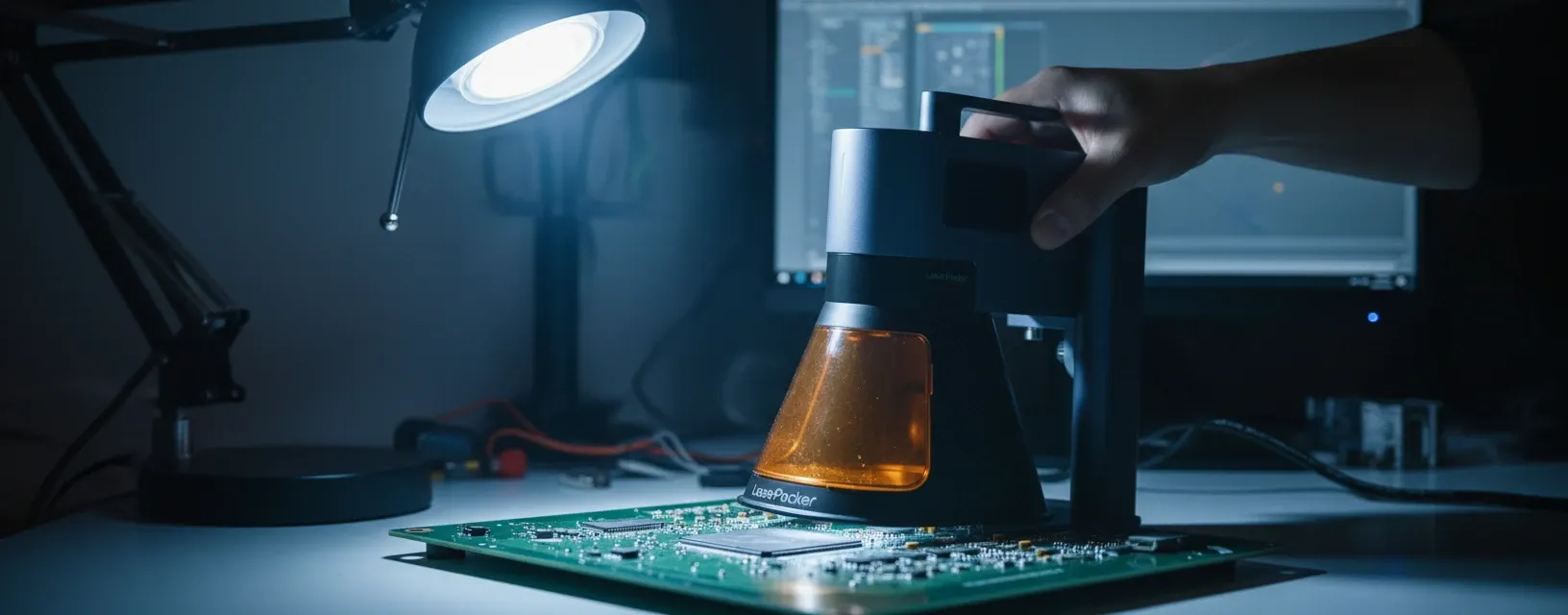
The dual-laser setup is the LP5's strongest selling point. Full stop. Having both fibre and diode in one portable unit means you're not swapping machines mid-project.
Fibre Laser (20W) — Metals
Stainless steel, titanium, brass, copper, aluminium, gold, silver, and coated metals. I've been engraving personalised cufflinks and hip flasks for a wee side business — the results on polished stainless are spot on. Deep marking on titanium takes multiple passes but the finish is professional-grade., a favourite among Britain’s tradespeople
Diode Laser (20W) — Organic Materials
Wood, leather, acrylic, fabric, card, slate, and food-grade items. The diode side handles cutting on thinner materials too — up to 3mm acrylic in a single pass, 5mm plywood with two passes.
To be clear, the cutting capability isn't going to replace a dedicated CO2 laser for production work. But for prototyping, small-batch craft items, and personalisation? Brilliant.
What About the xTool F1 Ultra?
Near-identical material range. Both machines handle the same substrates. The difference is workflow speed when switching between laser types — the LP5's software handles the transition automatically based on material selection, which saves a few clicks each time. Small thing. Adds up over a full day's work.
If you're working with mixed-material projects — say, a wooden box with a brass plate — the LP5's dual-laser system means one setup, two materials, no faffing about.
Software and Day-to-Day Usability
LaserPecker Design Space has improved massively since the LP2 days. It's now a proper design tool rather than just a laser controller. Import SVGs, DXFs, and bitmap images. Adjust power curves per material. Save presets.
Is it as polished as xTool Creative Space? Honestly, no. The xTool software feels more mature — better layer management, more intuitive material database. That said, LaserPecker's app has caught up significantly through 2025 and into 2026, and the mobile app connectivity is genuinely useful for craft fair work.
Portability Factor
At 4.3kg, the LP5 is the lighter machine. I've carried it to three craft markets in Belfast this spring and it fits in a padded camera bag. The xTool F1 Ultra at 5.8kg isn't heavy either, but that 1.5kg difference matters when you're also lugging stock, a table, and a card reader.
Learning Curve
Coming from the LaserPecker 4, the LP5 felt familiar within an hour. Complete beginners? Budget a weekend of testing on scrap material. The auto-focus and material presets help enormously — select "stainless steel, polished" and the machine dials in appropriate power and speed settings automatically.
My mate who runs a trophy shop in East Belfast picked one up in April. He was producing sellable work within two days. That's decent for a machine at this level.
Value for Money in the UK Market
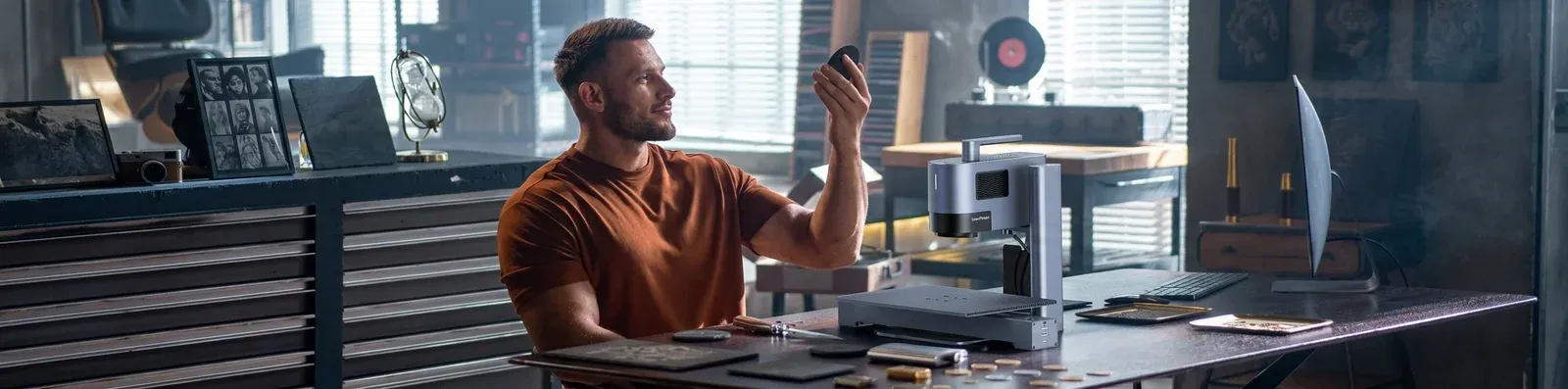
Let's talk money. The LaserPecker LP5 sits at £2,999. The xTool F1 Ultra is £3,199. That's a £200 difference for machines with broadly similar capabilities.
So what does that £200 save you — or cost you?
LP5 advantages for the price: Higher max speed (36,000 vs 24,000mm/s), finer resolution (0.001mm vs 0.003mm), lighter weight, better portability
xTool F1 Ultra advantages: Larger working area (115mm vs 100mm), more mature software ecosystem, slightly better documentation
For UK makers doing personalisation work — pet tags, jewellery, corporate gifts, small signage — the LP5 represents better bang for your buck. You're getting higher specs at a lower price point. The smaller working area rarely matters for these applications., popular across England
If you're doing larger batch work where that extra 15mm matters, or you value software polish above all else, the xTool might justify its premium. For most makers I know, though, the LP5 is the smarter buy in 2026.
Both machines qualify for capital allowances if you're running a business. Check GOV.UK's guidance on capital allowances for current thresholds — the Annual Investment Allowance covers equipment purchases like these.
Safety and UK Compliance
Any laser engraver operating at 20W demands respect. The LP5 is a Class 4 laser device. You need proper eye protection (OD5+ rated for 1064nm fibre and 455nm diode wavelengths), adequate ventilation, and a fire-safe workspace.
The machine includes an integrated safety shield and automatic shut-off if the unit detects movement during operation. Good features. Not a substitute for proper safety practice, though.
UK users should familiarise themselves with the HSE's guidance on laser safety in the workplace, particularly if you're using the machine commercially or in a shared space. The relevant standard is BS EN 60825-1 for laser product safety — details available through the BSI (British Standards Institution).
I keep my LP5 in a dedicated corner of my workshop with a proper extraction fan vented outside. The fumes from engraving leather and acrylic aren't something you want to breathe in, regardless of what machine you're using. Common sense, but it bears repeating.
Frequently Asked Questions
Can the LaserPecker LP5 cut metal?
The LP5's 20W fibre laser is designed for engraving and marking metals, not cutting. It can engrave stainless steel, titanium, brass, aluminium, gold, and silver with excellent precision at 0.001mm resolution. For cutting thin metals, you'd need a higher-powered fibre laser system in the 50W+ range.
Is the LaserPecker LP5 worth £2,999 for a small UK business?
For personalisation businesses, jewellers, and craft makers, the LP5 offers strong ROI. A single engraved hip flask sells for £25–45, meaning the machine can pay for itself within 100–150 orders. The dual-laser system eliminates the need to buy separate fibre and diode machines, saving approximately £2,000–3,000 versus two dedicated units.
How does the LP5 compare to the xTool F1 Ultra for jewellery engraving?
The LP5 has finer resolution (0.001mm vs 0.003mm) which gives it an edge for detailed jewellery work. It reproduces legible text at just 1.2mm height on polished metal. Both machines produce professional results, but the LP5's precision advantage shows on rings, pendants, and small items where micro-detail matters.
What safety equipment do I need for the LaserPecker LP5 in the UK?
You need OD5+ laser safety goggles rated for both 1064nm and 455nm wavelengths, a fume extraction system vented externally, and a fire-safe work surface. The machine is Class 4 under BS EN 60825-1. HSE guidance recommends a designated laser area with appropriate warning signage if used commercially.
Can I use the LP5 at craft fairs and markets?
Yes — the LP5 weighs 4.3kg and fits in a padded carry bag. It connects via Wi-Fi to a phone or tablet for design control. You'll still need the integrated safety enclosure and appropriate ventilation. Many UK makers use portable extraction units at events. Check your market's insurance requirements for laser equipment before attending.
What's the difference between the LaserPecker LP4 and LP5?
The LP4 uses a single fibre laser source, while the LP5 adds a 20W diode laser alongside the 20W fibre. This means the LP5 handles organic materials (wood, leather, acrylic) that the LP4 can't engrave effectively. The LP5 also offers improved resolution at 0.001mm versus the LP4's specifications, plus faster maximum galvo speed.
Key Takeaways
- The LaserPecker LP5 offers superior resolution (0.001mm) and faster maximum speed (36,000mm/s) compared to the xTool F1 Ultra, at £200 less.
- Dual 20W fibre + 20W diode lasers handle metals and organic materials in one portable 4.3kg unit — genuinely useful for mobile makers and craft fair sellers.
- The xTool F1 Ultra wins on working area (115mm vs 100mm) and software maturity, making it better suited for users who prioritise those factors.
- At £2,999, the LP5 replaces the need for two separate machines, representing a potential saving of £2,000–3,000 for UK workshops needing both laser types.
- Real-world engraving speeds of 8,000–12,000mm/s produce professional results on stainless steel — a 40mm logo completes in approximately 15 seconds.
- UK users must comply with BS EN 60825-1 Class 4 laser safety requirements, including OD5+ eye protection and fume extraction.
- For most UK makers doing personalisation, jewellery, and small-batch production in 2026, the LP5 represents the better overall value proposition.
Ready to try LSRPCKR AP?
Shop Now — £5037.90